Certification
1. What You Need to Pass
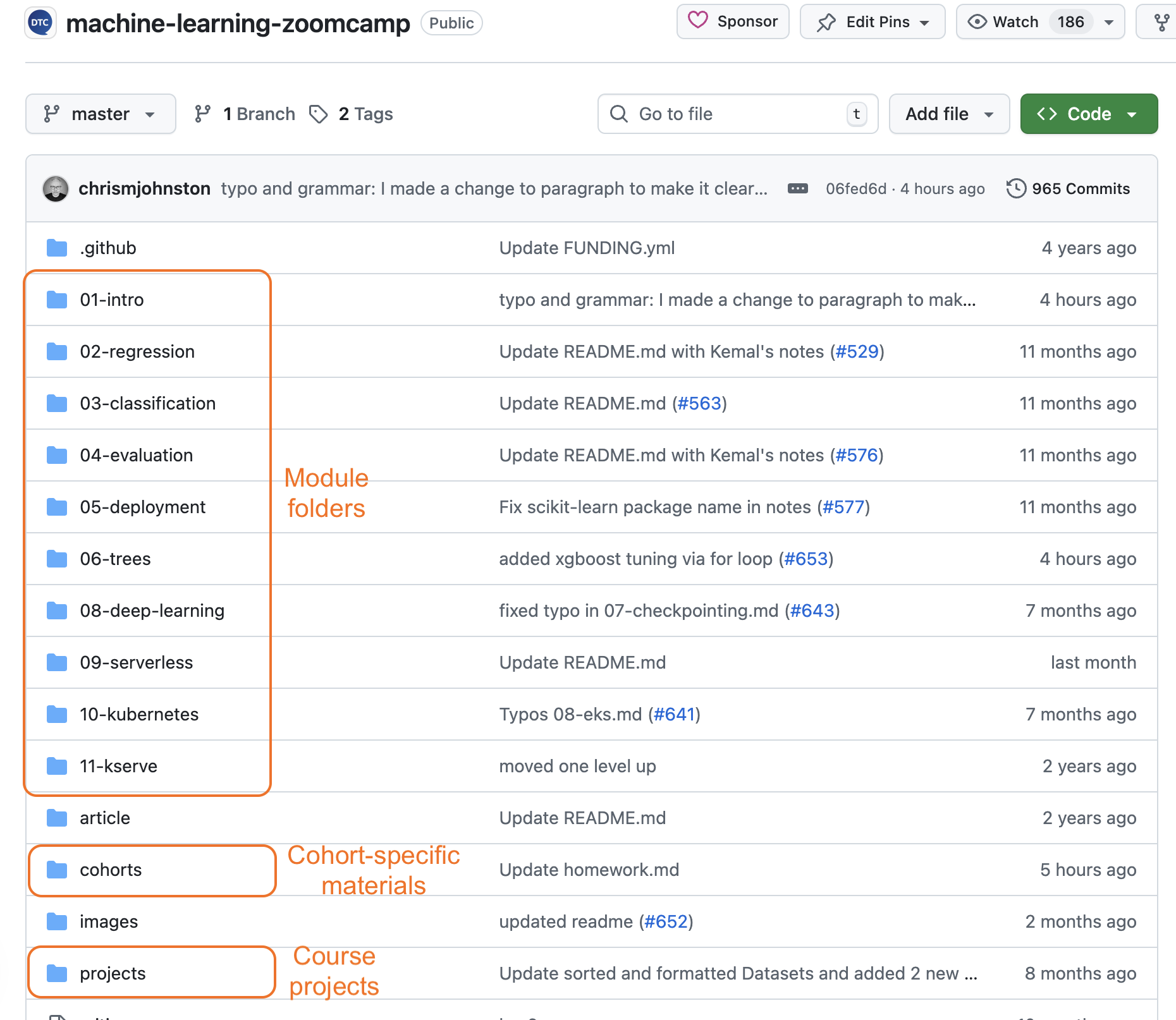
Earning your ML Zoomcamp certificate requires completing a specific combination of projects rather than achieving a particular grade. You must pass 2 out of 3 available projects, giving you flexibility in choosing your path. You can complete either the midterm project plus the final capstone project, or the final capstone project plus a second capstone project.
For each project you submit, you’re required to complete peer reviews by evaluating 3 of your fellow students’ projects. See the peer review guide for the evaluation process and tips.
All your projects must include working deployed models. This means you can’t just build a model—you need to make it accessible through deployment, demonstrating real-world ML engineering skills.
[!note] Homework assignments are optional for certification, but they’re essential for solidifying your understanding of each module’s concepts.
2. Timeline and Expectations
Each project follows a structured timeline: you’ll have 2 weeks for development and implementation, followed by 1 week dedicated to peer reviews. This rhythm helps maintain steady progress while allowing sufficient time for quality work.
The earliest you can receive your certificate is January 2025, which comes after completing your second project. While the course offers self-paced learning, deadlines are designed to help maintain momentum and ensure you complete the course successfully.
[!note] It’s not possible to finish the course early. Certificates are issued only after the final deadlines.
3. Understanding What’s Required vs Optional
To clarify expectations, only two elements are strictly required for certification: completing 2 out of 3 projects with deployments, and conducting peer reviews (3 reviews per project you submit).
However, several activities are optional but highly recommended for your learning success. Homework assignments provide excellent practice and help solidify concepts, even though they don’t directly impact certification. Learning in public activities and active community participation, while optional, significantly enhance your learning experience and can lead to career opportunities.
4. Project Submission and Technology Choices
See the project submission guide for details on how to submit your project, commit IDs, certificate name settings, and other platform mechanics.
You are not restricted to the technologies covered in the course. If the course uses a specific framework or cloud provider, you can use alternatives. However, if you use something outside the course content, describe everything with as many details as possible - your peer reviewers need full context to evaluate technologies they may not know.