DataTalks.Club is a free online community for data and AI practitioners. We have more than 100,000 members in Slack and more than 130,000 newsletter subscribers. Companies sponsor DataTalks.Club to reach data engineers, ML and AI engineers, and data scientists. They sponsor our weekly newsletter, free courses, live workshops, podcast, and events.
I’m Alexey Grigorev, and I founded DataTalks.Club in September 2020. Companies often write to me to ask how we can work together, and I usually reply with a long email that explains the options. I wrote that email once and put it on this page. If it looks like a fit, write to me at alexey@datatalks.club and I’ll send you our media kit with prices.
Sponsors keep DataTalks.Club free
Everything we do is free. Our courses have no tuition, the newsletter has no subscription fee, and the podcast has no paywall. Most of our members study in their own time, often after work, and a paywall would shut out many of them.
Running the community still costs money. We prepare course content, host weekly events, moderate Slack, edit the podcast, and write a newsletter every Monday. Sponsors pay for that work, and in return they reach an audience that ads rarely reach.
DataTalks.Club in numbers
These numbers are from September 2026:
| Channel | Size |
|---|---|
| Slack community | 100,000+ members |
| Weekly newsletter | 130,000+ subscribers, sent every Monday |
| Free courses (Zoomcamps) | 5 courses a year, 60,000+ registered learners a year, 150,000+ registrations since 2021 |
| YouTube | 81,000 subscribers, 600+ videos |
| Podcast | 200+ episodes since February 2021 |
| DataTalks.Club on LinkedIn and X | 42,000 followers |
| Alexey Grigorev on LinkedIn and X | 67,000 and 29,000 followers |
| Website | 60,000 to 100,000 visits a month |
| Berlin meetup group | Around 9,000 members |
All courses are open source. The materials stay on GitHub and the lectures stay on YouTube, so people keep finding them years after a cohort ends. We also run a book club, where members discuss a book with its author.
Sponsorship options at a glance
| Format | What you get | Typical results |
|---|---|---|
| Newsletter primary slot | Top of the Monday issue, usually the subject line | 700 to 1,500 clicks |
| Newsletter secondary slot | A slot in the middle of the issue | 250 to 300 clicks |
| Stand-alone email | A dedicated send to the whole list | 700 to 2,000 clicks |
| Course mention | Logo, launch stream mention, optional demo video | 5,000 to 10,000 views |
| Course workshop | Hands-on session inside a course module, with homework | 5,000 to 10,000 views |
| Full course module | 5 to 10 lessons built around your open-source tool | 10,000 to 50,000 views |
| Live workshop | Code-along on our YouTube channel, opt-in leads | 2,000 to 7,000 views, around 100 live |
| Podcast episode | A conversation with me about your topic | 1,000+ listens |
| Guest post | A practical article on our blog | Permanent page on a site with 60,000+ monthly visits |
| Berlin event | Co-hosted meetup or in-person workshop | 100+ people in the room |
| My LinkedIn and X | A personal recommendation from me | 10,000 to 45,000 impressions on LinkedIn |
You can combine several formats in one campaign.
Audience demographics
The numbers come from our community survey. We publish the full survey results, so you can check them yourself.
About 54% of respondents are senior individual contributors, team leads, or directors. They pick tools and often approve the budget for them. About 36% are entry-level, and they take the tools they learn with them to their next job.
Nearly 30% work at companies with more than 1,000 employees, and another 17.8% at companies with 201 to 1,000. About 15% are freelancers and consultants, who recommend tools to each new client.
Most members want to learn about machine learning, AI, and MLOps. Data engineering, data science, data analytics, career growth, and leadership come next.
Tools the audience uses
We also survey the community about the tools they use and publish the results:
- How Do Data Professionals Use MLOps Tools and Frameworks?
- How Do Professionals Use Data Engineering Tools and Practices?
- How Do Professionals Use LLM Tools and Frameworks?
- How Do Professionals Use AI Tools for Personal Productivity?
Many people haven’t chosen a tool yet. 58.9% of respondents don’t use a vector database, 54.3% have no LLM-based system in production, and 74.1% don’t self-host open-source models. When people haven’t picked a tool, a course module or workshop can decide which one they try first.
The surveys also show if one tool already leads your category in our community. In that case, I’ll tell you before you spend money and suggest a format that takes this into account.
Newsletter sponsorship
The newsletter goes out every Monday to more than 130,000 subscribers. Each issue has community news, upcoming events, new course modules, and articles we recommend. It’s the quickest way to reach the whole community, and most sponsors start here.
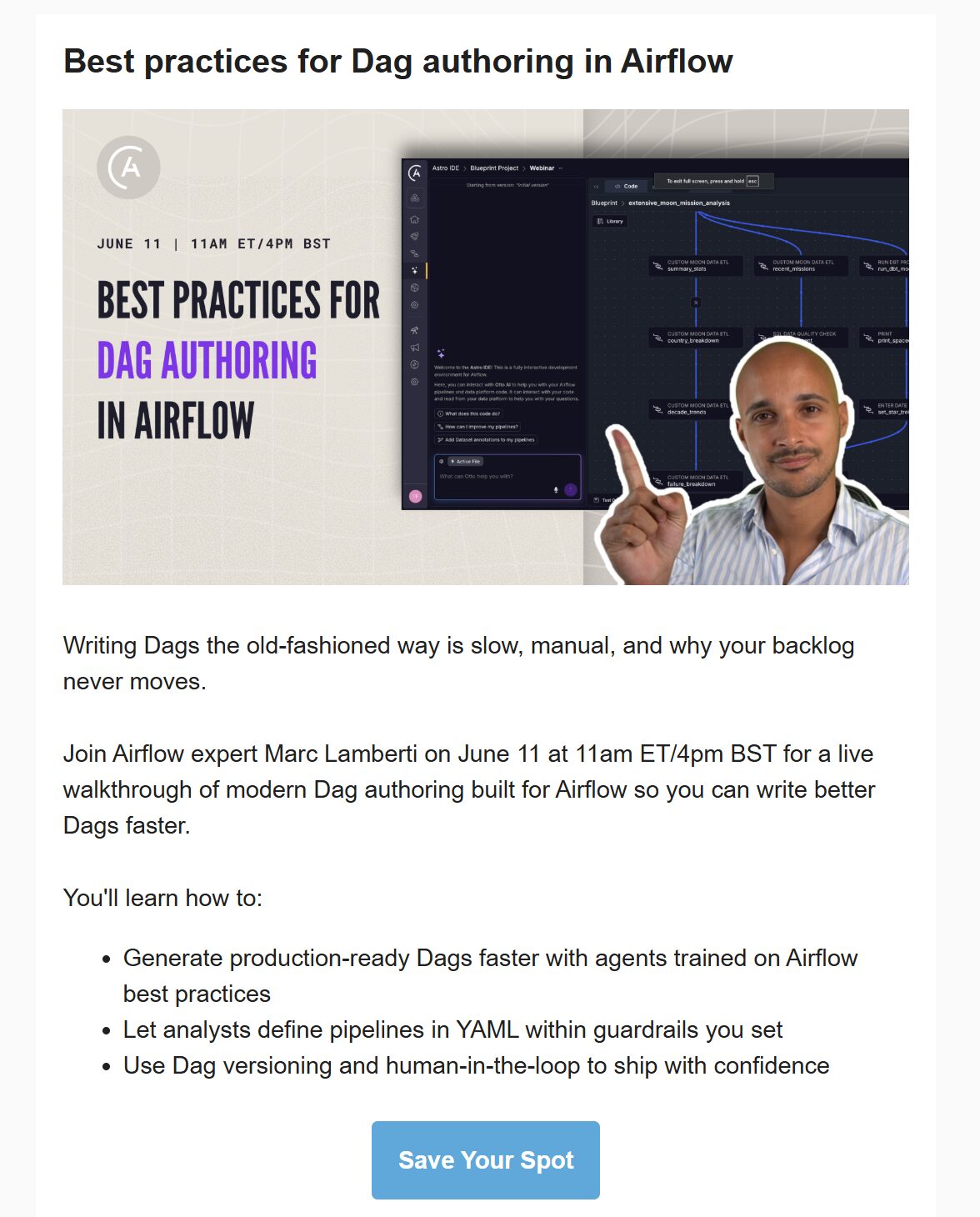
There are three placements:
- Primary slot: the top of the newsletter, and your headline usually becomes the subject line. Use it for a major launch, a course, an e-book, or a guide.
- Secondary slot: the middle of the newsletter, next to community content. Use it for events, webinars, and conferences.
- Stand-alone email: a dedicated email to the whole list, with no other sponsors, on a date you choose. Use it for launches and lead generation.
We write the text together, and after the issue goes out you get a report with opens, clicks, and click-through rate.
Course sponsorship (Zoomcamps)
We run five free courses a year. Each one is a cohort with live sessions, homework, projects, and a certificate:
| Course | Starts | Registered learners per cohort |
|---|---|---|
| Data Engineering Zoomcamp | January | 20,000+ |
| MLOps Zoomcamp | May | 10,000+ |
| LLM Zoomcamp | June | 10,000+ |
| Machine Learning Zoomcamp | September | 10,000+ |
| AI Dev Tools Zoomcamp | November | 10,000+ |
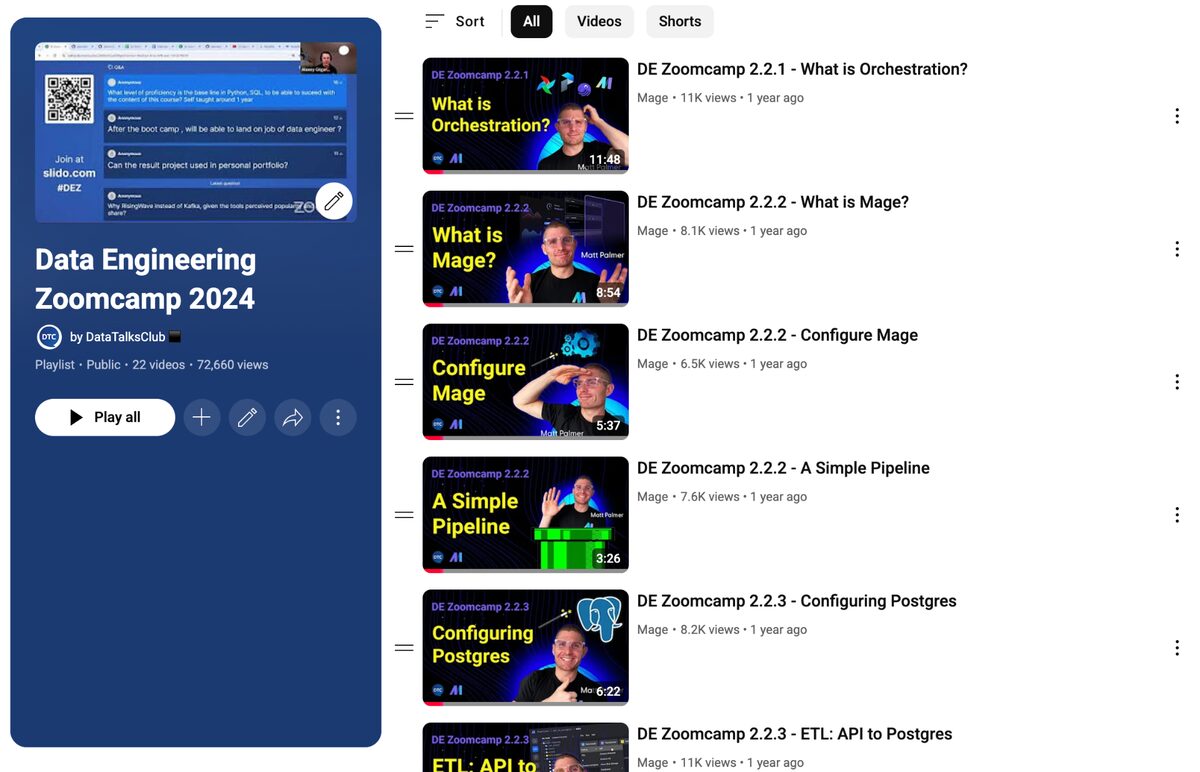
You can sponsor a course at three levels:
- Mention: your logo on the course page, a mention in the launch stream and in our Telegram channel, a suggestion to students to try your product, and an optional demo video of up to 10 minutes.
- Workshop: a hands-on session inside a course module where students use your product to apply what the module teaches. It comes with a homework assignment of three questions, and you can add a raffle.
- Full module: we teach a whole topic with your tool in 5 to 10 lessons. Students do a homework assignment of six or seven questions, and you hold office hours with them. We only do this for open-source tools.
Sponsors come back to courses more often than to any other format. Students install your tool and use it in labs, homework, and projects, so they don’t just see an ad. Many of them post their projects on LinkedIn and X, so more people see your tool. And the materials stay on GitHub and YouTube, so modules we recorded years ago still bring new users.
Courses need the most lead time, because we build your part into the curriculum before the cohort starts.
Live workshops
A workshop is a live, hands-on code-along session. Your speaker shows how to solve a practical problem with your tool, and we stream it on our YouTube channel.
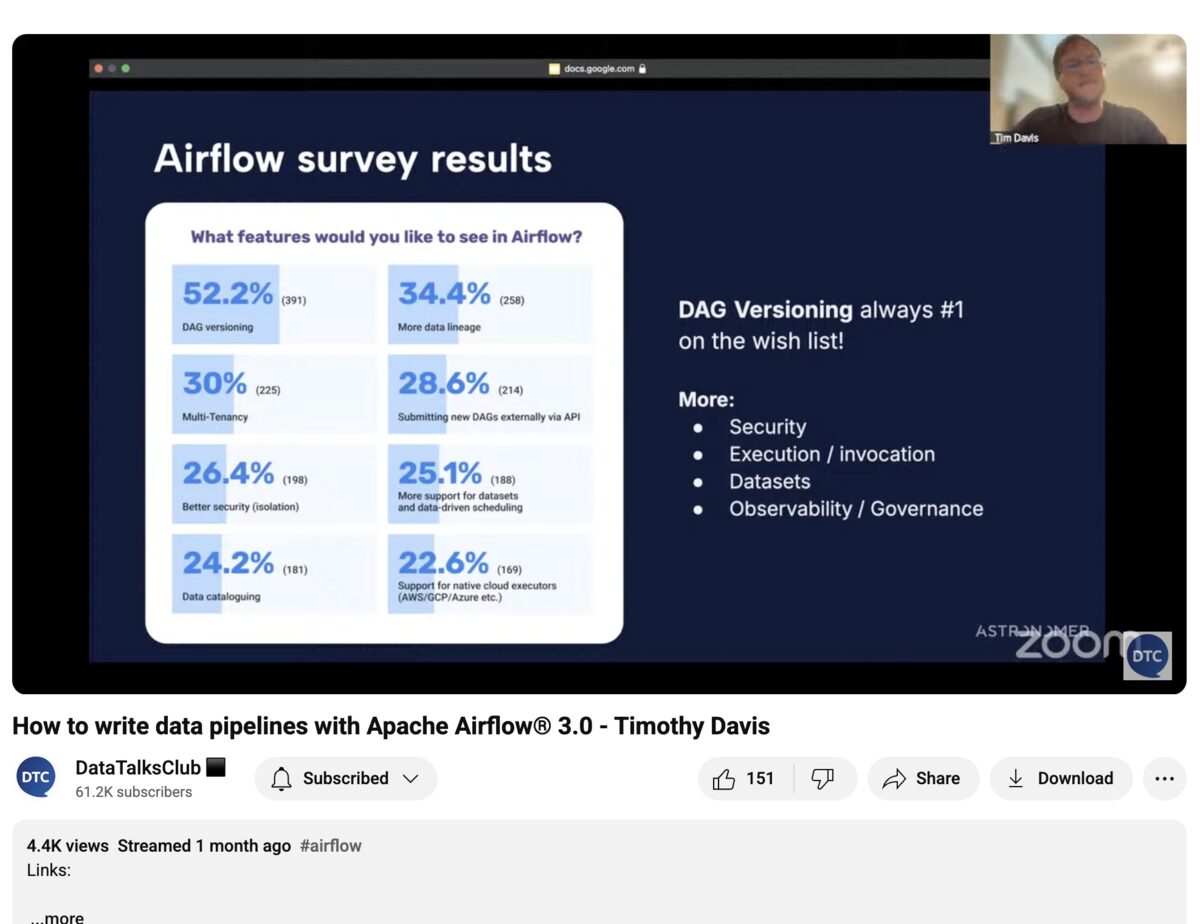
A workshop includes:
- Promotion on Luma, Slack, social media, and our website
- Planning together, so the topic fits our audience and doesn’t turn into a product demo
- A live stream on our main YouTube channel and a recording that stays there
- Contact details of attendees who opt in to share them
- An optional dry run before going live
I can host the session myself if you want a familiar face for the audience.
Podcast episodes
A sponsored episode is a conversation with me, published on YouTube and on podcast platforms. We’ve recorded the podcast since February 2021, and the listeners are data, ML, AI, and software engineers.
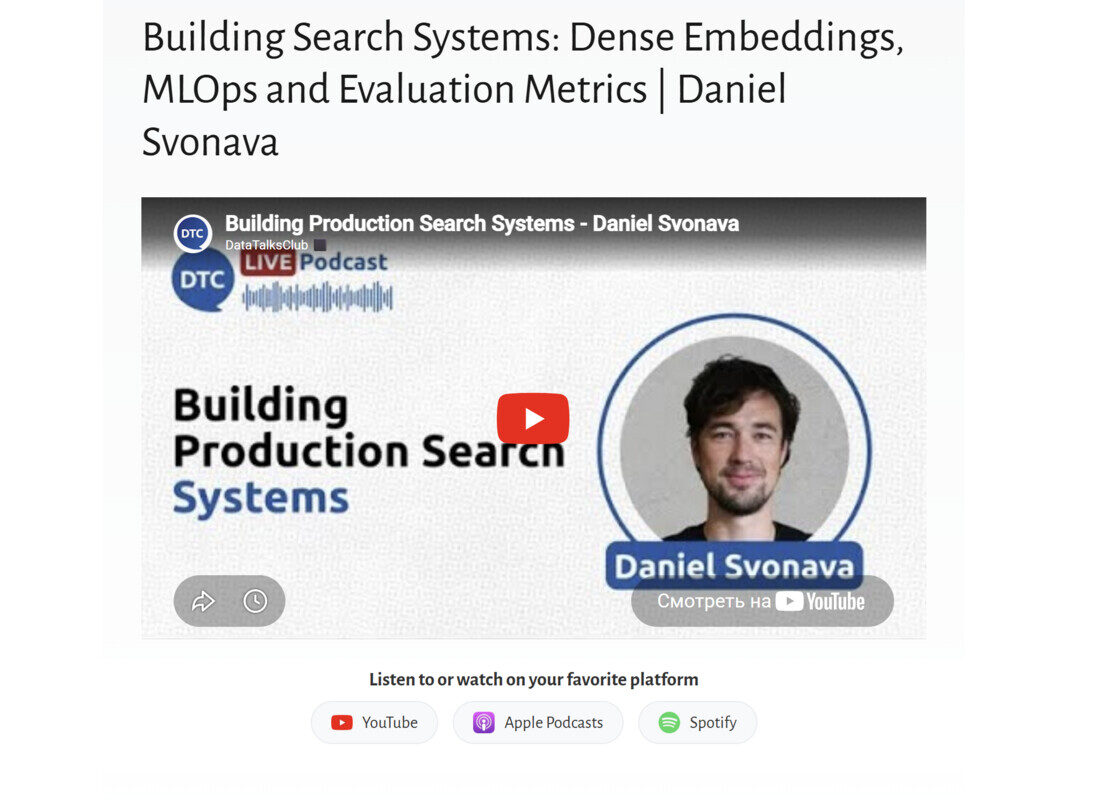
We plan the topic together around what the community wants to hear. We promote the episode in the newsletter and on social media, and the episode page with your link stays on our website.
Guest posts
A guest post is a practical article on the DataTalks.Club blog about a problem data and AI practitioners have.
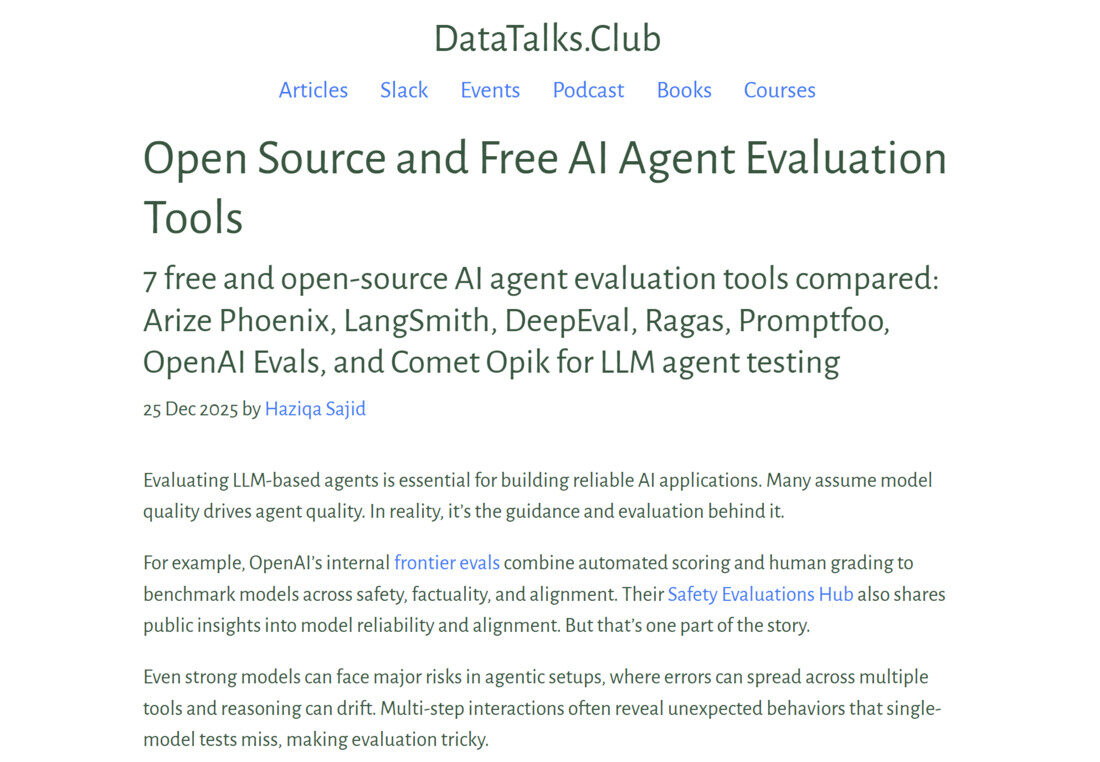
We help you choose the topic and edit the article, then publish it and promote it in the newsletter and on social media. We keep the article on the blog with your link.
In-person events in Berlin
We co-host evenings for data, ML, and AI practitioners in Berlin. Our Berlin meetup group has around 9,000 members, and 100+ people usually come in person.
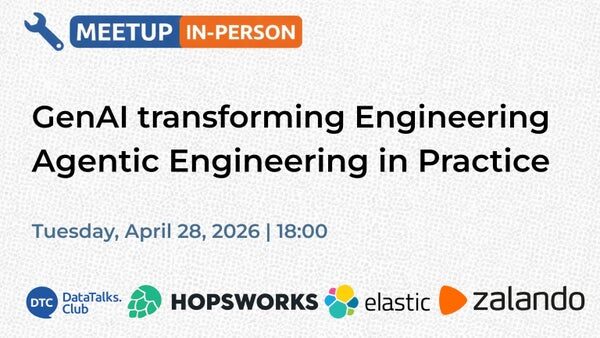
There are two formats:
- Co-hosted meetup: an evening with talks, a panel or Q&A, and networking. We handle promotion on Meetup and in our channels, registration, emails to attendees, and check-in. You can add a sponsor table, swag, or a giveaway.
- In-person workshop: participants learn a skill and build something with your product. I lead the session and answer questions, and we can record it.
Posts on my LinkedIn and X
I can recommend your product, course, or event on my own accounts:
- LinkedIn: 67,000 followers, 10,000 to 45,000 impressions per post
- X: 29,000 followers, 2,000 to 10,000 impressions per post
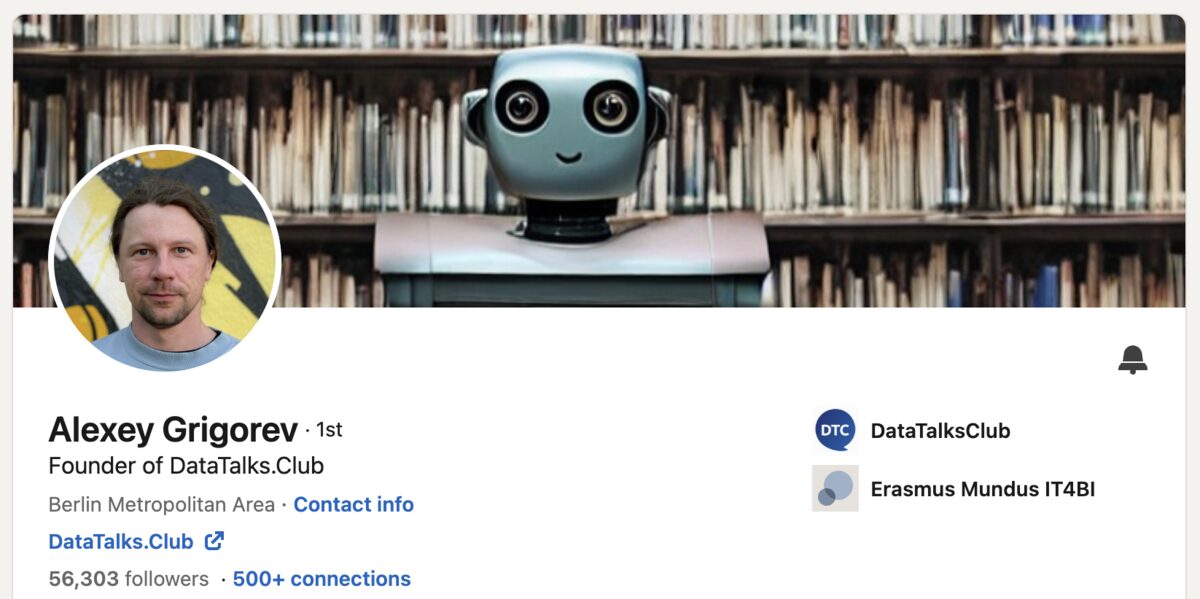
It can be a video, a post with custom images, or a giveaway. I write these posts myself.
Other formats
Not every collaboration fits the formats above. We’ve also run swag giveaways, hackathons, roundtable discussions, and sponsored community lunches, and we’ve helped companies design their own courses. If you have another idea, email me and I’ll tell you whether I think it will work.
Sponsor testimonials
At Prefect, we sponsored multiple conferences such as PyCon and KubeCon. At startup price, you pay $10k-$15k USD to have a booth for 2-3 days. We got around 200-300 people stop by the booth, a lot of which are existing users. We maybe got 4-5 real new users.
Compare this to MLOps Zoomcamp where we had around 300-400 homework submissions. There are also a lot of people who just watch the courses without doing the homework. Some of these people are in brand name institutions too. I’ve seen people from Micron, IBM, Accenture taking the course to name a few.
Beyond MLOps Zoomcamp, the DataTalks.Club Slack channel is very big on democratizing high quality information to people trying to break into industry. Sponsoring the initiative feels more like it goes to a good cause in comparison to conferences.
Kevin Kho, ex-Prefect, now Figue
Collaborating with DataTalks.Club for the Data Engineering Zoomcamp on data ingestion went way better than we thought. We didn’t just hit our target audience; we attracted a mix of beginners and experts from diverse backgrounds.
The workshop got over 10,000 views on YouTube. Plus, the participants really put the word out, doing a lot of the marketing legwork for us. Just last week, we were featured in two podcasts, and the number of people trying out dlt doubled. Our Slack community also saw a 25% increase in a month, largely thanks to the workshop.
This workshop wasn’t just another content we did, it changed the game regarding dlt’s exposure to our data audience. Besides addressing the professionals who took the course, DTC put dlt on the radars of other SaaS vendors who started integrating dlt into their products.
Adrian Brudaru, dltHub
We sponsored Module 7 of Machine Learning Zoomcamp, which covers production-ready machine learning using BentoML. Over 165 students attempted the homework, and many used BentoML in their midterm and final projects. Some units in the module had over 1,000 views, and we also noticed a lot of positive social media posts about BentoML.
Compared to other sponsorship opportunities we evaluated, ML Zoomcamp aligned more with BentoML’s developer-focused approach.
Tim Liu, BentoML
The Valohai team was looking to connect with more data scientists and ML pioneers. That is when we came across DataTalks.Club community.
Thanks to Alexey, who was really easy to talk to and very fast to respond, our ebook has found the right audience through the newsletter and Alexey’s personal recommendations on LinkedIn.
This was one of the most fruitful collaborations in terms of lead acquisition.
Henrik Skogström, Head of Growth, Valohai
When we kicked off a project which required some talented Data Scientists to come and help one of our clients, NASA, the challenge was speed. We were in a rush and we needed quick access to an engaged community. We found DataTalks.Club, collaborated with Alexey to create content through 3 channels: the community Slack, email newsletter and his personal LinkedIn feed.
Outcome: the lowest candidate acquisition cost we’ve seen across all channels this year.
Nathan Jefferson, ex-Topcoder, Founder of IMBALANCE
DataTalks.Club stands as one of the strongest AIIA communities, with a wide range of seasoned and aspiring data enthusiasts. DataTalks.Club continually delivers excellent content and consistently drives highly engaged people to AIIA events and research.
Daniel Jeffries, Managing Director, AI Infrastructure Alliance
Learner reviews
Learners also write about our courses on their own blogs:
I love the zoomcamp in really different aspects. All aspects were well managed for building the best community, the best learning experience with well connected and like-minded people around the world. I have never seen such a connected and active community for a while and it made me motivated. Data Talks Club builds an incredible community with people that are interested in data, where everyone is open to sharing thoughts, helping each other and creating connections over the globe.
Irem Ertürk, Data Engineering Zoomcamp by Data Talks Club
Credit to the course instructors here because they did make the concepts understandable to someone like me. DataTalks club maintains an active community where they will answer any doubts you have regarding the course and also data engineering in general. The slack community is always active.
Work-In-Progress Data Engineer, I participated in the Data Engineering zoomcamp
The course covers a broad range of topics quite relevant to data engineering and is well-organized. So far, I’ve been enjoying quite a lot. Kudos to the organizing team.
Mahdi Moosa, Musings on the Data Engineering Zoomcamp
Companies that have sponsored DataTalks.Club
AI Infrastructure Alliance, Aiven, Anaconda, Arize AI, Astronomer, Atlan, BentoML, Bruin, dltHub, Double Cloud, dstack, Exasol, Iterative, JetBrains, Kestra, Mage, Nebius, NVIDIA, Prefect, Qwak, Saturn Cloud, Scale AI, Snorkel AI, Snowflake, Snowplow, SODA, Tecton, Temporal.io, Toloka, Valohai, Weights & Biases, WhyLabs, and WikiMedia.
Many of them have sponsored us more than once.
The sponsorship process
A sponsorship goes through these steps:
- You email me about your goal: adoption, leads, hiring, or awareness for a launch.
- I recommend a format. Sometimes it’s cheaper than the one you asked about, because I think it’ll work better for your goal.
- We prepare the content together. You send a draft or a brief, we edit it for our audience, and you approve the final version.
- It goes out on the date we agreed on.
- You get the numbers: opens, clicks, views, attendance, or homework submissions, depending on the format.
Our rules for sponsored content
We follow these rules for every sponsor:
- We never share member data. Sponsors don’t get email addresses or other personal information. We only pass on contacts of people who opt in at workshops and events.
- We always label sponsored content, so our members know when something is paid.
- If I don’t think a placement will work for our audience, I’ll tell you before you pay for it.
- Full course modules are for open-source tools only. We don’t teach thousands of learners a workflow they can’t run without a licence.
Supporting us as an individual
If our courses or newsletter helped you and you want to help keep them free, you can support us through GitHub Sponsors. We spend the money on the same things as sponsorship money, such as free events, course content, and the tools we use to run the community.
Contact
To sponsor DataTalks.Club, email me at alexey@datatalks.club. I’ll send you our media kit with prices and details for every format, and then we can discuss what you want to achieve.
You don’t need a finished plan. Tell me roughly what you want and what budget you have, and I’ll suggest what to do. If I don’t think we can help, I’ll tell you that too.
Frequently asked questions
Companies that develop products to help data engineers, ML engineers, AI engineers, data scientists, and analytics teams. That includes developer tool vendors, cloud and data infrastructure providers, ML and LLM platforms, observability and orchestration tools, open-source projects looking for adoption, conferences and events looking for attendees, and recruiters hiring data talent. If engineers and data scientists choose your product themselves, rather than a procurement department choosing it for them, our audience is a good fit.
Our weekly newsletter (three placement types, including a dedicated stand-alone send), free Zoomcamp courses (a brand mention, a hands-on workshop inside a module, or an entire course module built around your tool), stand-alone live workshops streamed on YouTube, podcast episodes, guest posts on the DataTalks.Club blog, in-person Berlin meetups and workshops, and personal recommendations from Alexey Grigorev on LinkedIn and X. You can combine formats into a single campaign.
Pricing depends on the format and on how many placements you book. Newsletter placements are the most accessible entry point, while full course modules are the deepest and most expensive integration. Email alexey@datatalks.club and we’ll send you our media kit, which lists the current rates for every format along with the numbers behind them, plus a recommendation for what fits your goals and budget.
We never share subscriber email addresses or personal information with sponsors. For workshops and events, attendees can opt in to share their contact details with you, and only those opt-in contacts are passed on. We never make exceptions to this rule.
You can send us a draft, and we’ll adapt it. Every placement goes through a content template that we refine together before it runs. Our audience ignores text that reads like a vendor ad, so we make your message more technical and specific. You approve the final version before it goes out.
After a newsletter placement runs, you get a report with opens, clicks, and click-through rate. For workshops and courses, you get view counts, live attendance, and homework submission numbers where applicable. For podcasts and articles, you get listen and traffic numbers. We share the real numbers, even when a campaign does worse than expected.
Newsletter slots are best booked one to two months in advance, and popular weeks go earlier. Course sponsorships need the most lead time, since the content has to be built into the curriculum before a cohort starts. Our courses launch in January (Data Engineering), May (MLOps), June (LLM), September (Machine Learning), and November (AI Dev Tools), so plan several months ahead for those.
Yes. Many of our sponsors were Series A or earlier when they first worked with us, and several ran their first developer marketing campaign with us. Newsletter placements and podcast episodes are the usual starting point for smaller budgets. Full course modules are open-source only, which also makes them a fit for young projects building adoption.
Yes. We’ve done swag giveaways, hackathons and competitions, course design help, roundtable discussions, and sponsored community lunches. If you have an idea for reaching data and AI practitioners, email us and we’ll tell you whether we think it will work.