Learning in Public
The course management platform rewards you for sharing your learning journey publicly. When submitting homework, projects, or peer reviews, you can include links to social media posts about what you learned - each link earns extra points on the leaderboard.
How It Works
When you submit homework, a project, or a peer review, you’ll find a “Learning in public links” section in the submission form.

Add links to your social media posts about what you learned. Each link earns 1 extra point on the leaderboard.
Link limits per submission type:
- Homework submissions - up to 7 links
- Project submissions - up to 14 links
- Peer reviews - up to 2 links
What Counts as a Valid Link
Valid links are your personal social media posts where you share your progress, insights, or experiences from the course. These include posts on:
- X (Twitter)
- BlueSky
- Medium, Dev.to, Hashnode, or other blogging platforms
- Personal blogs or websites
Each link should be a post you created yourself about what you are learning in the course.
What Does Not Count
Links that are not your personal posts about the course do not count. Examples of invalid links:
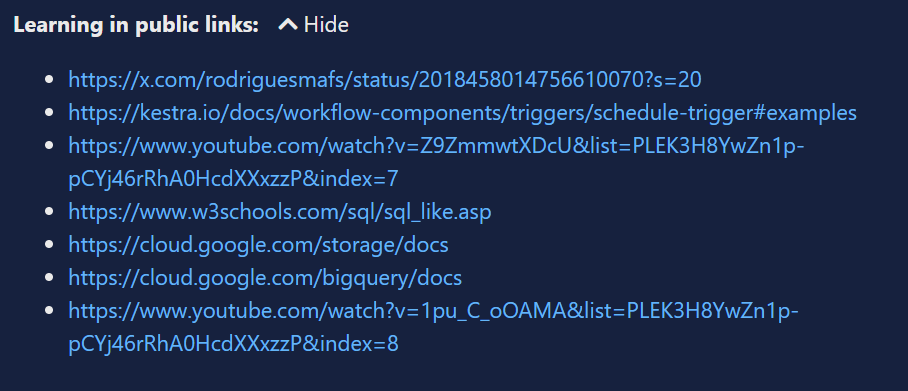
- Documentation pages (e.g. Google Cloud docs, W3Schools)
- YouTube videos from other people
- Random articles or tutorials found on the internet
- Course materials or lecture links
- Links to tools or software websites
The screenshot below shows an example of misuse - the submitted links are documentation pages and YouTube videos instead of the student’s own social media posts:
Misuse Policy
Submitting links that are not your personal social media posts is against the rules. If a course participant is found misusing the system:
- All points earned from “Learning in Public” will be removed from their account
- The ability to earn “Learning in Public” points will be permanently disabled for them
- They can still participate in the course and earn points from homework, projects, and peer reviews
We encourage everyone to actually practice learning in public because it benefits you directly - it helps reinforce what you learned, builds your professional network, and creates a portfolio of your skills. But submitting random links just for points defeats the purpose.
Reporting Misuse
If you come across anyone on the leaderboard who is misusing this system by posting links that are not their personal posts about what they are learning in the course, please report it in the course Slack channel.
Learn More
For tips on what to share, templates to get started, and examples of good learning in public posts, see the Data Engineering Zoomcamp learning in public guide.